


Sunnyvale, California · A guide for buyers & sellers
Sunnyvale Real Estate, Elevated.
Clear guidance for your next move.
Call James at (559) 786-9322Your next decision, with clearer evidence
Sunnyvale Real Estate: Make Your Next Move with Clearer Evidence
A Sunnyvale move starts with the home, the ownership responsibilities and the alternatives available to you. Whether you are buying or selling, begin with the questions that could change your decision.
A detached home, a detached home within an HOA and a condo or townhome can involve different costs and responsibilities. Compare the actual documents, condition, location and current alternatives before narrowing a shortlist or choosing a pricing approach.
Sunnyvale City · Monthly Market Data
Sunnyvale Housing Market Snapshot
Reporting period: September 2026
Updated November 1, 2026
A useful market review separates single-family homes from condos and townhomes, then narrows the comparison to the ownership setup, location, condition and alternatives that matter to your decision.
Single-Family Homes
- Median closed-sale price
- $2,820,000
- Closed sales
- 53
- Average days on market
- 10 days
- Reported inventory
- 41 homes
- List price received
- 107%
Condos & Townhomes
- Median closed-sale price
- $1,250,000
- Closed sales
- 25
- Average days on market
- 40 days
- Reported inventory
- 63 homes
- List price received
- 102%
Source: SCCAOR · September 2026 city statistics. Figures use the Sunnyvale city rows, not county totals. Inventory is from the report and does not represent today's availability. Citywide medians depend on the mix of homes sold and are not a valuation of an individual property. “List price received” follows the report's label; it does not specify original versus final asking price.
Start with the right comparison.
Single-family homes in this report sold faster on average than condos and townhomes. These citywide figures are background for a property-specific comparison.
Compare the choices you could make. Ask how the home compares with the properties you could realistically choose, and which unanswered questions could change your offer.
Understand your actual competition. Review relevant completed sales and today's competing listings before choosing a pricing range or preparation budget.
For published reports, visit SCCAOR's housing-statistics resource. We can discuss how to research comparable properties during a consultation.
Your Sunnyvale shortlist
Browse homes with a purpose.
Explore Sunnyvale homes for sale, including single-family homes, condos and townhomes. Availability changes. Compare ownership obligations, layout, condition, location and total cost before treating two homes as comparable choices.
Opens James's RealScout search. RealScout's existing registration and privacy terms apply. No registration is submitted by this page.
Four starting points for local research
Compare the address, then the area.
The City's planning resources are useful starting points. A planning-area name is not a school boundary, a promised amenity or a substitute for checking the property.
01 / DOWNTOWN
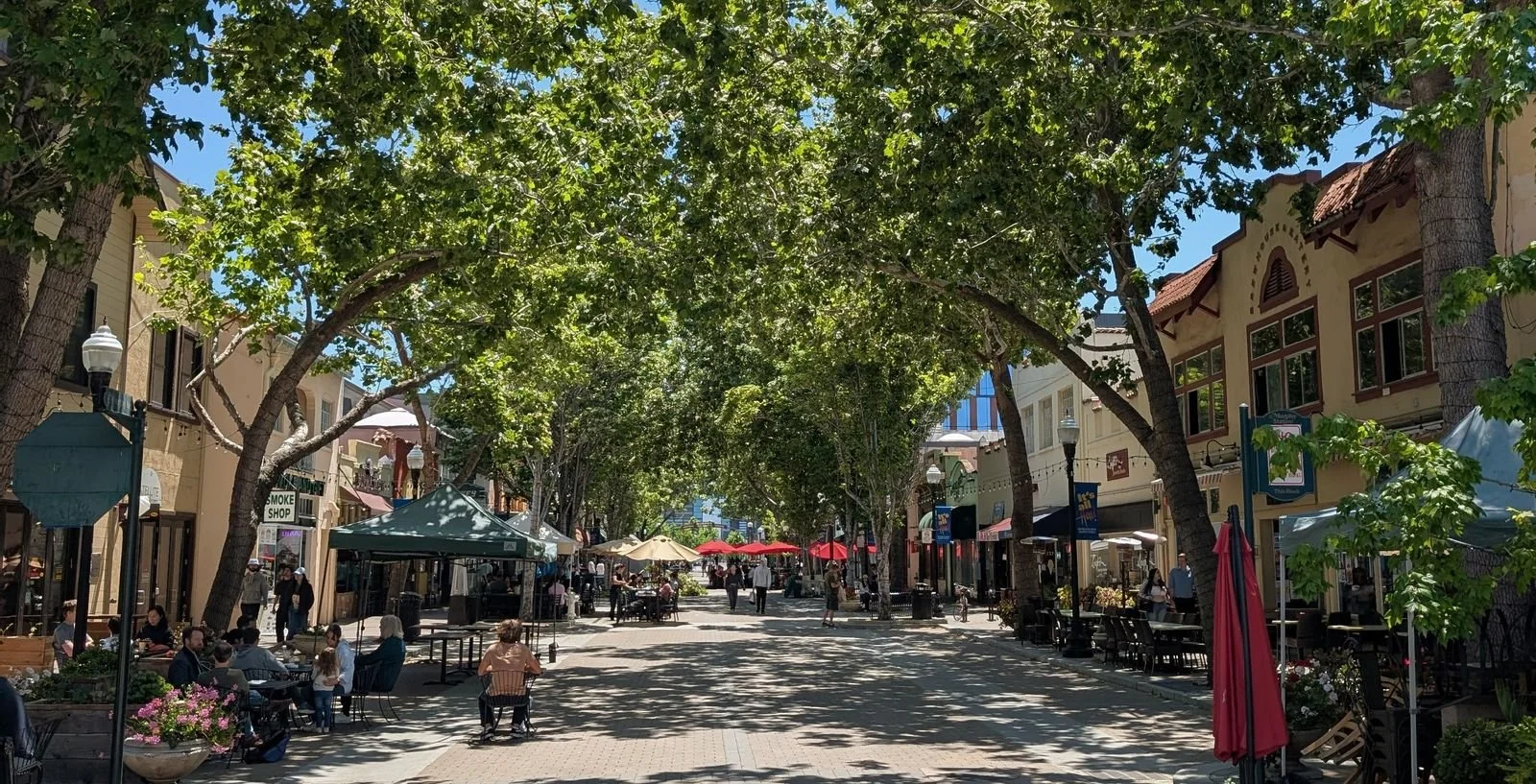

Look at what is here today.
Compare the property's current surroundings, parking and actual route to Sunnyvale Caltrain. If a nearby development matters to your decision, read its current City record; a rendering does not establish completion.
City Downtown development resources · Sunnyvale Caltrain station
02 / LAWRENCE STATION
Start with the property's jurisdiction.
Identify the exact parcel and applicable City records, then test the station route and service for the trip you need. A station-area label does not establish jurisdiction, a commute time or a price premium.
03 / EL CAMINO REAL
Look beyond a corridor label.
Compare street exposure, entrances, outdoor space and parking with your alternatives. Check parcel-specific information before attaching value to an expansion or redevelopment possibility.
04 / MOFFETT PARK
Separate a plan from a usable route.
Use the City's plan as background, then separate today's usable routes and surroundings from proposed changes. A plan does not establish when an improvement will be available.
Considering both cities? Explore the Santa Clara real estate guide for its own market and location context.
Buying in Sunnyvale
Choose the responsibilities as carefully as the home.
Compare three ownership setups.
A detached home without an HOA, a detached home within an HOA and a condo or townhome can place different responsibilities on the owner. Start with the ownership documents and maintenance obligations, not the exterior appearance.
For a home without an HOA, build a realistic allowance for the building, systems and grounds you would maintain. For an HOA property, identify what the dues cover, what remains yours to maintain and what the association's records leave unresolved. A townhome layout alone does not tell you whether the ownership is condominium or another structure.
Request available budgets, reserves and reserve studies, meeting minutes, insurance information, maintenance responsibilities and assessment disclosures. Ask your lender and insurer to review the specific project and coverage early enough to inform your decision. California DRE's HOA resources provide background; the property's documents determine the questions to pursue.
Compare the full cost, not only the purchase price.
Put principal and interest, property taxes, insurance, HOA dues where applicable, utilities and a maintenance allowance side by side. Include mortgage insurance if your financing requires it. Keep upfront costs, likely near-term work and an emergency reserve separate from the monthly total.
Obtain property-specific tax, financing and insurance estimates from the appropriate professionals. The seller's current expenses are not confirmation of your future costs. Separate estimates from confirmed amounts and identify what remains unanswered.
Set a comparison range before an offer number.
Compare recent sales that match the property's ownership setup, location, floor plan, usable space, condition and parking. For an attached home, begin with genuinely comparable homes in the same community when available; explain any expansion beyond that group. Do not blend unrelated properties simply to reach a preferred number.
Then ask what evidence would change your decision. Would a repair, insurance limitation, HOA concern or different street exposure change what you would pay? Your budget and tolerance for unresolved issues belong in the decision alongside the sales data.
Before you make an offer, ask:
- What does this home offer that the realistic alternatives do not?
- What do the disclosures, inspections and permit records establish about its condition and alterations?
- Which ownership, insurance or financing questions need another professional's answer?
- Does the actual route, parking and day-to-day layout work for you?
- What total monthly cost and near-term work would leave you comfortable?
- Which findings would make you change the terms or pass on the home?
Bring one property or two homes you are comparing. We can sort the important differences, open questions and next steps before you make a commitment.
For the transaction roadmap, explore the Buyer Guide.
Selling in Sunnyvale
Make pricing and preparation decisions together.
Identify your actual competition.
Begin with the homes a buyer would seriously compare with yours. A detached-home sale does not resolve the value of an attached home, and another unit's sale can require careful adjustment for layout, condition, parking or ownership obligations.
Closed sales show completed transactions. Current listings show what buyers can choose now. Pending listings may provide context, but their eventual closing price and terms may not yet be available. Use those differences to explain a pricing range, the strongest comparisons and where the evidence is less certain.
Test preparation against a specific buyer concern.
Before building a renovation list, identify the issue each item would address. Is it a condition concern, unclear maintenance history, a presentation problem or an improvement that is mainly a personal preference?
Compare a limited preparation plan with a more extensive option. Account for cost, scheduling, possible permit requirements and uncertainty about recovering the expense. A useful recommendation explains why the work may help this property's position; it does not promise that every dollar spent returns a fixed amount.
For a condo or townhome, organizing HOA, parking, insurance and maintenance information can matter as much as choosing finishes. For a detached home, make the condition, improvements and relevant records easy to understand. Verify the facts before marketing them.
Choose timing around your constraints and today's alternatives.
Your move, preparation capacity and willingness to carry the property all affect the launch plan. Review competing homes close to the intended launch date. No citywide snapshot identifies a universally best week to sell.
Agree on what will prompt a review after launch: showing feedback, inquiries, new competing listings and changes in available comparable evidence. Revisit the plan against those observations.
Compare the outcome after costs.
A headline price is only part of a sale decision. Ask for an estimated net-proceeds comparison using your actual payoff information and clearly stated assumptions for selling costs, preparation and concessions. Confirm transaction-specific figures with escrow, the lender and your tax adviser where appropriate.
Bring your address, target timing and the work you are considering. We can build a relevant comparison set and decide what is worth investigating before you spend.
For the broader process, explore the Seller Guide.
Address-specific research
Check what applies to the actual property.
Schools
Use address-based district information, then confirm assignment and enrollment with the serving district. A nearby school, neighborhood label, ZIP code or listing description is not confirmation.
Permits and proposed changes
Compare City records with the actual property. A permit application, an issued permit and a completed inspection are different findings. Ask the City about missing or unclear information.
Transit and daily routes
Check the actual door-to-platform route and current service for your trip. Include the route at the destination and test the time of day that matters to you. Map distance is not a commute guarantee.
Costs and insurability
Obtain financing and insurance information for the actual home. Review current tax information, possible supplemental assessments and relevant HOA records. Keep confirmed costs, estimates and unresolved questions distinct.
Sunnyvale real estate questions
Clear answers. Useful next steps.
No. Compare ownership documents, association responsibilities, condition, layout, parking and the alternatives you could choose. A similar floor plan does not make two properties equivalent.
Use the exact parcel to confirm jurisdiction and applicable records. Check the actual station route and service separately.
Check the individual project's current record. A plan, approval, active construction and completed improvement are different stages. Verify today's usable surroundings separately from future proposals.
No. It describes a reported set of sales, not the value of one property. Use relevant comparable homes and current alternatives, with their differences made explicit.
Compare the concern the work addresses, its cost, timing and uncertainty with a smaller preparation plan. The answer depends on your property and goals; no citywide renovation-return promise can settle it.
Start with address-based district resources, then confirm assignment and enrollment with the serving district. Do not rely on a neighborhood name, ZIP code or third-party listing label.
Yes. Bring a shortlist, an address or the questions you want to resolve. The buyer and seller consultation buttons use the same existing consultation event.
Plan your next move
What would help you make your next Sunnyvale decision?
Buying
Bring the properties you are weighing and the monthly cost you want to stay comfortable with.
Selling
Bring your address, timing and preparation questions so we can decide which evidence matters first.